

How to Choose the Right Grounding Product for Your Needs
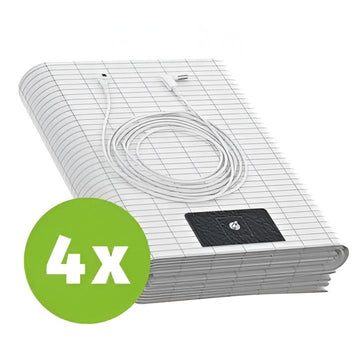
Choosing a grounding product becomes much easier when you start with one question:
When and where do you actually want to use it?
A grounding sheet and a grounding mat are built around the same basic principle — conductive contact connected to a proper grounding path — but they fit very different parts of your day.
For REBANA, the best grounding product is not automatically the biggest or most expensive option.
It is the one that fits naturally into your routine.
Key Takeaways
• Choose based on your daily routine rather than price alone.
• Grounding sheets are designed for longer overnight contact.
• Grounding mats are more flexible for desks, sofas and daytime routines.
• Confirm that your outlet is properly grounded before use.
• Start with one product and expand only if grounding fits your lifestyle.
• Keep expectations realistic and treat grounding as a complementary wellness practice.
Start With Your Routine, Not the Product
The most common mistake when choosing a grounding product is starting with specifications before considering how you will actually use it.
A better question is simple:
When during the day are you most likely to maintain consistent contact?
For some people, the answer is overnight.
For others, it is several hours spent working at a desk.
Your routine should guide the product choice.
Grounding works best as something that becomes easy to repeat rather than another wellness habit you have to remember.
Grounding Sheets: Best for Overnight Contact
A grounding sheet is designed to bring grounding contact into the hours you already spend resting.
Once positioned on the bed and connected correctly, it can become part of your normal sleep environment.
A grounding sheet may suit you if:
• You want grounding to happen during your nighttime routine.
• You prefer longer periods of consistent contact.
• You do not want to add another activity to your day.
• You want a grounding product integrated directly into the bed.
The major advantage is convenience.
You do not need to schedule a separate grounding session. You simply incorporate the sheet into the place where you already spend several hours each night.
Direct bare-skin contact with the conductive surface provides the simplest connection.
Grounding Mats: Best for Daytime Use
A grounding mat offers more flexibility.
It can be placed under bare feet while working at a desk, beside a sofa during relaxation, or in a recovery space after exercise.
A grounding mat may suit you if:
• You work at a desk for several hours each day.
• You want to experiment with grounding before committing to a larger product.
• You prefer a compact and portable option.
• Your bedroom setup makes a grounding sheet less practical.
• You want grounding available during work or recovery routines.
For many first-time users, a mat is the simplest starting point because it can fit into several different situations.
Sheet or Mat: Which One Gives More Contact?
Neither product is automatically better.
The key difference is the way they fit into your schedule.
A sheet is designed for longer contact during rest.
A mat is designed for flexible contact during the day.
If your goal is to make grounding part of your nighttime environment, the sheet usually makes more sense.
If you spend long periods sitting at a desk or relaxing indoors, a mat may be more practical.
The best product is the one you will actually use consistently.
Check Your Outlet Before Choosing
The grounding product itself is only one part of the setup.
A grounding mat or sheet must be connected according to its instructions to a suitable grounding path.
With products designed for grounded electrical outlets, this means the grounding connection — not the live electrical supply.
Before using an outlet-based grounding product, confirm that the outlet is properly grounded.
Older buildings and some apartments may have outlets that appear grounded but are not connected correctly.
If you are unsure, use an appropriate outlet-testing method or seek qualified electrical guidance.
The product should never depend on assumptions about the outlet.
Understanding Contact
Grounding products rely on conductive contact.
Direct bare-skin contact is the simplest way to maintain that connection.
For a mat, this often means placing bare feet directly on the surface.
For a sheet, it means positioning the conductive surface so that bare skin can make contact while you rest.
The exact setup should always follow the instructions supplied with the specific product.
Set Realistic Expectations
Grounding has attracted growing interest in wellness and scientific research, but the evidence base is still developing.
Studies have explored grounding in relation to areas such as sleep, recovery, circulation, stress and inflammatory responses.
Some findings are promising.
However, grounding products should not be presented as guaranteed treatments for medical conditions.
At REBANA, we believe the most useful position sits between dismissal and overclaiming.
Grounding is worth exploring thoughtfully, while recognizing where the science is established and where further research is still needed.
Which Product Fits Which Person?
Here is a simple way to narrow the decision.
For the Overnight Sleeper
Choose a grounding sheet if your priority is incorporating grounding into your nightly rest.
The sheet allows contact to happen during hours you already spend in bed.
For the Desk Worker
Choose a grounding mat if you spend several hours working at a computer.
Placing it beneath bare feet can turn an ordinary workday into an opportunity for grounding contact.
For the Curious Beginner
A grounding mat is usually the more flexible starting point.
It is compact, simple to reposition and can be used in several areas of the home.
For Someone Focused on Recovery
A grounding mat can fit naturally beside a sofa, desk or recovery area.
This makes it easier to use after exercise or during quieter parts of the day.
For Couples or Shared Bedrooms
A grounding sheet may make more sense if both people want to integrate grounding into the nighttime environment.
The correct product size and contact setup will depend on the sheet design and bed configuration.
For Someone Who Wants Both Day and Night Grounding
A combination of a mat and sheet can cover different parts of the routine.
The mat can support daytime contact while the sheet becomes part of the nighttime environment.
However, there is no need to begin with multiple products.
Start with the part of your day where grounding is most likely to become consistent.
Start Simple
Wellness routines often become unnecessarily complicated.
Grounding does not need to be one of them.
Choose one product.
Set it up correctly.
Use it consistently during a routine you already have.
Then decide whether it adds enough value to your day to expand further.
This approach is usually more useful than purchasing several grounding products before you know how naturally the practice fits into your lifestyle.
What About Product Size?
Size matters mainly because it affects comfort and contact.
For grounding mats, choose a surface large enough for the way you plan to use it.
For example, a mat used beneath the feet at a desk does not need to cover an entire room.
For grounding sheets, the right size depends on your mattress, sleeping position and how much conductive surface you want available.
Always check the confirmed dimensions of a product rather than assuming that labels such as Single, Queen or King are identical across brands and markets.
What About Materials?
Conductive grounding products generally combine a base material with conductive components.
The exact composition varies by manufacturer and product.
When comparing options, look for clear information about:
• Material composition
• Conductive components
• Care instructions
• Connection method
• Product dimensions
• Included accessories
Avoid relying only on broad claims such as “premium” or “advanced conductivity.”
Specific product information is more useful.
Care and Maintenance Matter Too
A grounding product is only useful if its conductive surface remains in good condition.
Always follow the supplied care instructions.
For conductive sheets, certain laundry products, oils, fabric softeners or excessive heat may affect conductive fibers depending on the material used.
For grounding mats, keep the surface clean and follow the manufacturer's recommendations for cleaning and storage.
Proper maintenance helps preserve the intended conductive properties of the product.
A Quick Decision Guide
Choose a Grounding Sheet if:
• You want grounding during sleep.
• You prefer longer periods of contact.
• You want the product integrated into your bed.
• You do not want to remember a separate daily grounding session.
Choose a Grounding Mat if:
• You work at a desk.
• You want grounding during the day.
• You want something compact and flexible.
• You are new to grounding and want a simple starting point.
• You want to move the product between different spaces.
Consider Both if:
• You already use grounding consistently.
• You want separate day and night setups.
• Grounding has become a meaningful part of your everyday routine.
The Right Product Is the One You Will Use
There is no universally best grounding product.
A technically impressive product that stays in a cupboard has very little practical value.
A simple mat beneath your feet every workday may be far more useful.
Likewise, someone who rarely sits still during the day may find that a grounding sheet fits naturally into their lifestyle.
Choose based on your routine first.
Then consider materials, dimensions, setup and budget.
That keeps the decision simple and practical.
Conclusion
Choosing between a grounding mat and grounding sheet does not need to be complicated.
Start by identifying the part of your day where consistent contact is easiest.
For nighttime routines, a grounding sheet is often the natural choice.
For desks, relaxation and daytime use, a grounding mat offers greater flexibility.
Whichever option you choose, confirm the grounding connection, follow the product instructions and keep realistic expectations.
Grounding should complement a healthy lifestyle, not replace its foundations.
Rest. Balance. Naturally.
FAQs
Which grounding product is best for beginners?
A grounding mat is often the simplest starting point because it is compact, flexible and easy to integrate into a desk or relaxation routine.
Is a grounding sheet better than a grounding mat?
Not necessarily. A sheet is better suited to overnight contact, while a mat offers more flexibility during the day. The better choice depends on your routine.
Do grounding products work without a grounded outlet?
Products designed to connect through an outlet require a proper grounding path. Some grounding systems may use other grounding methods, but you should always follow the instructions for the specific product.
Can two people use one grounding sheet?
That depends on the dimensions and design of the sheet. Both users need appropriate contact with the conductive surface for the intended setup.
How long should I use a grounding product each day?
There is no universal requirement. The most practical approach is to incorporate grounding into an existing routine and use it consistently.
Are grounding products safe to use?
Grounding products should be used only according to their instructions and with a confirmed grounding connection. They are designed to connect to ground rather than draw power from the live electrical supply.