

10 Must-Know Grounding Basics for Beginners
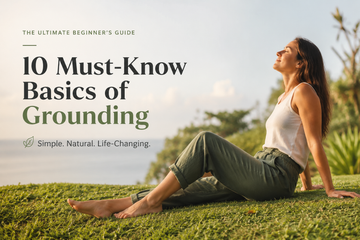
If you have recently started hearing about grounding and are not quite sure what it means, this is the right place to begin.
Grounding — sometimes called earthing — refers to creating conductive contact between the body and the Earth. Outdoors, that can mean standing barefoot on grass, soil or another suitable natural surface. Indoors, conductive products such as grounding mats and grounding sheets are designed to provide a similar grounding pathway when connected correctly.
The idea is simple.
The science is still developing.
And for beginners, understanding the basics is much more useful than chasing exaggerated wellness claims.
At REBANA, we approach grounding through a balance of natural simplicity, practical use and scientific curiosity.
Here are 10 fundamentals worth knowing before you begin.
Key Takeaways
• Grounding and earthing usually refer to the same physical practice.
• Outdoor grounding can be as simple as direct bare-skin contact with an appropriate natural surface.
• Indoor grounding products are designed to create a conductive pathway to ground.
• Direct skin contact provides the simplest conductive connection.
• Research has explored grounding in relation to sleep, recovery, stress, circulation and inflammatory processes.
• The evidence remains developing and should not be treated as proof that grounding cures medical conditions.
• Consistency and correct setup matter more than complicated routines.
• Grounding should complement healthy lifestyle foundations rather than replace them.
1. Grounding and Earthing Usually Mean the Same Thing
You may see both “grounding” and “earthing” used across wellness articles, product descriptions and scientific papers.
In this context, they generally refer to the same physical idea: conductive contact between the body and the Earth.
That contact might happen directly outdoors through bare skin touching the ground.
It can also happen indoors through a properly designed conductive grounding product.
There is one potential source of confusion.
The word “grounding” is also used in psychology to describe mindfulness techniques that help someone reconnect with the present moment.
That is a completely different practice.
When REBANA talks about grounding, we mean physical conductive contact with the Earth or an appropriate grounding pathway.
2. The Earth Has an Electrical Potential
Grounding is based on a physical relationship between conductive surfaces.
The Earth's surface maintains an electrical potential, and the human body is also conductive.
When bare skin makes contact with an appropriate conductive natural surface, electrical equalization can occur between the body and the Earth.
Researchers interested in grounding have explored whether this contact may influence certain physiological processes.
The important point for beginners is simple:
Grounding does not require a powered electrical device.
It is about connection to ground.
3. Researchers Have Proposed a Role for Electrons and Oxidative Stress
One theory discussed in grounding literature involves electrons available through contact with the Earth's surface.
Researchers have proposed that this electron transfer may interact with oxidative and inflammatory processes in the body.
This is an interesting hypothesis and has been discussed in published grounding reviews.
However, it should not be treated as a fully established clinical mechanism.
Claims that grounding “neutralizes inflammation” throughout the body or acts as a guaranteed antioxidant treatment go beyond what current evidence can support.
A more accurate way to say it is:
Grounding research has explored whether conductive contact with the Earth may influence oxidative and inflammatory processes.
4. Modern Life Creates Less Direct Contact With Natural Ground
For much of human history, people spent considerably more time outdoors and in direct contact with natural environments.
Modern lifestyles look very different.
Shoes, synthetic flooring, elevated buildings, cars, offices and indoor routines can mean that many people spend very little time barefoot on natural surfaces.
That does not automatically mean modern life creates a health problem because we are “disconnected from the Earth.”
But it does explain why grounding now feels like a separate wellness practice rather than something that happens naturally throughout the day.
For many people, grounding is simply a deliberate way to reintroduce some direct contact with natural surfaces.
5. Some Natural Surfaces Are More Conductive Than Others
Outdoor grounding depends on the surface.
Common natural surfaces that may provide conductive contact include:
• Grass
• Soil
• Sand
• Natural stone
• Unpainted concrete
• Some natural bodies of water
Dry, highly insulating materials are less useful for conductive contact.
Examples may include:
• Rubber
• Vinyl
• Thick synthetic flooring
• Carpet
• Sealed or painted surfaces
• Asphalt
Conditions such as moisture can also influence conductivity.
For beginners, there is no need to overcomplicate this.
If you want to try grounding outdoors, bare feet on grass, soil or sand is a simple place to start.
6. There Is No Universal “Perfect” Amount of Grounding
You may see recommendations online telling you to ground for a specific number of minutes every day.
Current research does not establish one universal duration that everyone needs.
Some studies have used longer or repeated grounding periods, including overnight use.
For everyday practice, the most useful approach is to choose a period that fits naturally into your routine.
That might mean:
• A short barefoot walk outside
• Twenty minutes sitting on grass
• A grounding mat beneath your feet while working
• A grounding sheet incorporated into your nighttime routine
Consistency is generally more practical than trying to optimize an exact number of minutes.
7. You Can Ground Indoors Using Conductive Products
Outdoor grounding is simple, but it is not always practical.
Weather, climate, work schedules, apartment living and access to outdoor space can all make regular barefoot grounding difficult.
That is where indoor grounding products come in.
Common examples include:
• Grounding mats
• Grounding sheets
• Conductive sleep surfaces
These products are designed to create a conductive pathway between the user and an appropriate grounding point.
A grounding mat may work well beneath bare feet while sitting at a desk or relaxing.
A grounding sheet can integrate grounding into the hours already spent in bed.
For outlet-connected products, the grounding pathway should be confirmed and used according to the product instructions.
The product is designed to connect to ground rather than draw electricity from the live electrical supply.
8. The Research Base Is Real — but Still Developing
Grounding is not completely without scientific research.
Published studies and review papers have explored areas including:
• Sleep
• Stress
• Cortisol patterns
• Recovery
• Heart-rate variability
• Circulation
• Blood properties
• Inflammatory markers
• Exercise-related muscle soreness
Some findings are interesting.
At the same time, many studies are small, and the research field is not yet comparable in size or quality to more established areas of sleep, exercise or medical science.
That distinction matters.
It would be inaccurate to say that grounding has no research behind it.
It would also be inaccurate to say that the available evidence proves all of the broad wellness claims sometimes made online.
REBANA's position is simple:
Explore the evidence with curiosity, while keeping the limitations visible.
9. Grounding Is Not a Substitute for Medical Care
This is one of the most important basics for any beginner.
Grounding is a wellness practice.
It is not a medical treatment.
It should not replace:
• Medical diagnosis
• Prescribed medication
• Physical therapy
• Evidence-based treatment
• Professional advice for persistent health symptoms
If you are experiencing ongoing pain, significant sleep problems, inflammation, cardiovascular symptoms or another medical concern, speak with an appropriate healthcare professional.
You can still explore grounding as part of a broader wellness routine.
Just keep its role in perspective.
10. Starting Is Easier Than It Sounds
Grounding does not need to become another complicated wellness ritual.
If you have access to an appropriate outdoor area, you can begin simply by spending some time barefoot on a natural conductive surface.
If outdoor grounding is not practical, an indoor grounding mat may be the easiest product to try.
For people who want to integrate grounding into sleep, a grounding sheet may make more sense.
The most important part is choosing something that fits naturally into your existing routine.
There is no need to track every minute.
No need to force yourself into a complicated schedule.
And no need to buy several products at once.
Start simple.
Pay attention to how the practice fits into your day.
Then decide whether you want to continue.
How to Start Grounding Outdoors
A simple outdoor routine might look like this:
1. Find an appropriate natural surface such as grass, soil or sand.
2. Remove shoes and socks.
3. Allow bare skin to make comfortable contact with the surface.
4. Stay for as long as naturally fits your routine.
5. Repeat consistently if you enjoy the practice.
Grounding should feel simple, not forced.
How to Start Grounding Indoors
If using a grounding mat:
1. Confirm the intended grounding pathway is appropriate.
2. Connect the grounding cord according to the supplied instructions.
3. Place the mat where you already spend time.
4. Make direct contact with bare skin where practical.
5. Keep the cord positioned safely and securely.
If using a grounding sheet:
1. Position the sheet according to the product instructions.
2. Connect it to the intended grounding pathway.
3. Make sure the conductive surface can contact bare skin.
4. Follow the confirmed washing and care instructions.
5. Incorporate it into your normal sleep routine.
Which Product Is Best for Beginners?
For many beginners, a grounding mat is the simplest starting point.
It is compact, flexible and easy to use during everyday activities.
A grounding mat may suit you if:
• You work at a desk.
• You want daytime grounding.
• You want something easy to reposition.
• You want to try grounding before committing to a larger product.
A grounding sheet may suit you if:
• You want overnight contact.
• You prefer grounding during rest.
• You do not want to create a separate daytime routine.
• You want grounding integrated into your bedroom.
Neither is universally better.
Choose based on your routine.
Common Beginner Mistakes
Assuming You Need to Feel Something
A properly connected grounding product should not feel electrically active.
You should not expect heat, vibration or a powered sensation.
Expecting Immediate Results
Individual experiences vary.
Grounding should not be approached as an instant solution.
Ignoring the Grounding Connection
For indoor products, proper setup matters.
Do not assume an outlet is correctly grounded simply because it looks like a three-prong outlet.
Buying Too Many Products at Once
Start with one setup.
If grounding fits naturally into your lifestyle, you can expand later.
Believing Every Health Claim Online
Grounding is surrounded by both genuine research and exaggerated marketing.
Separate the two.
Look for sources, study design and realistic language.
The Bigger Picture
Grounding can be an interesting addition to a wellness routine.
But the foundations still matter more.
Prioritize:
• Consistent sleep
• Regular movement
• Balanced nutrition
• Time outdoors
• Daylight exposure
• Stress management
• Appropriate medical care
Grounding can complement those habits.
It should not replace them.
Conclusion
Grounding is one of the simplest wellness practices to explore.
At its core, it is about conductive contact with the Earth.
You can do that outdoors through direct contact with an appropriate natural surface or indoors using a correctly designed grounding product.
The research is developing, with studies exploring sleep, recovery, stress, circulation and inflammatory processes.
But grounding should be approached with realistic expectations.
Start simply.
Use it consistently if it fits your routine.
Stay curious about the science.
Rest. Balance. Naturally.
FAQs
What is grounding?
Grounding, sometimes called earthing, refers to conductive contact between the body and the Earth or an appropriate grounding pathway.
What surfaces can I use for outdoor grounding?
Natural surfaces such as grass, soil, sand and some unpainted conductive surfaces can be suitable. Surface conductivity varies depending on material and conditions.
How long should a beginner ground each day?
There is no universal scientifically established duration. Start with a period that fits naturally into your routine and focus on consistency.
Do grounding mats and grounding sheets work the same way as outdoor grounding?
They are designed around the same general principle of conductive contact with ground, but the exact setup depends on the specific product and grounding pathway.
Does grounding use electricity?
Grounding products are designed to connect to ground rather than draw power from the live electrical supply.
Is grounding scientifically proven?
Grounding has been studied in published research, but the evidence base is still developing. Some findings are promising, while larger and more rigorous studies are still needed.
Is grounding a medical treatment?
No. Grounding should be viewed as a complementary wellness practice and not as a substitute for diagnosis, medication or other medical care.
What is the easiest grounding product for a beginner?
A grounding mat is often the most flexible starting point, while a grounding sheet may be better for people primarily interested in overnight contact.